Imagine walking down an extremely long, perfectly white hallway with no doors or windows. After a few minutes, you'd probably lose track of exactly how far you've traveled. Is that the same spot you were at two minutes ago?
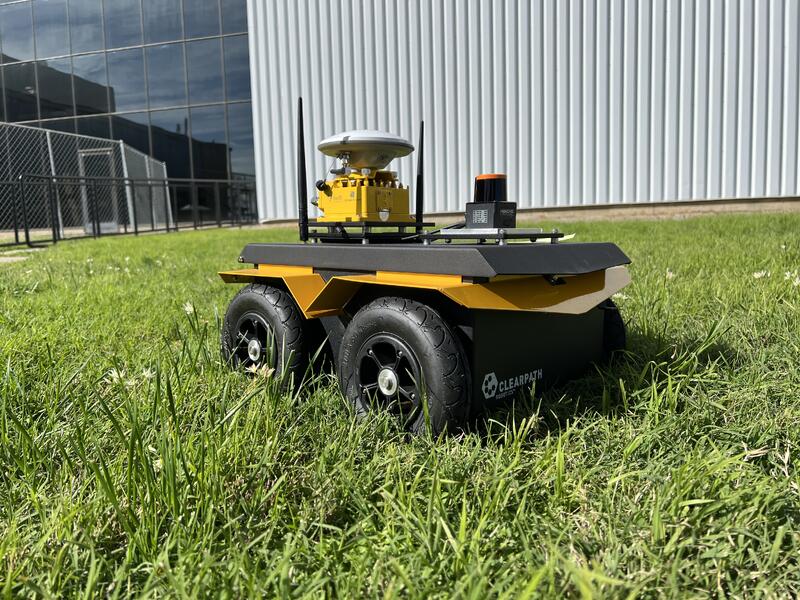
Robots face this exact same problem. Most modern robots use LiDAR (essentially a laser-based "eye") to map their surroundings. But when a robot is in a featureless corridor or a wide-open field, the laser sees nothing but a blank wall or empty space. This is what we call "geometric degeneracy," and it's where most navigation systems fail.
Giving the Robot a Better "Inner Ear"
To solve this, I developed a system that doesn't just rely on what the robot sees, but also on how it feels and how it's built.
By combining three distinct layers of data, the robot gets a much clearer picture of its motion:
- The Eyes (LiDAR): Scans the room to find landmarks.
- The Inner Ear (IMU): Measures balance and rotation, just like the fluid in your own ears helps you stay upright.
- The Feet (Wheel Encoders): Counts exactly how many times the wheels turn to estimate distance.
Teaching Physics to the Software
The secret sauce isn't just adding more sensors; it's enforcing kinematic constraints. In plain English, this means telling the software the "rules" of the robot's body. For example, a wheeled robot can't suddenly jump three feet into the air or slide perfectly sideways.
By hard-coding these physical rules "known as kinematic constraints" into the brain of the robot, the system can "ignore" sensor data that seems physically impossible, leading to a much smoother and more accurate path.
Handling the "Banana Peel" Problem
We also addressed wheel slippage. If a robot drives over a patch of wet grass or loose gravel, its wheels might spin while the robot stays still. A standard robot would think it has traveled a long distance, causing its map to break.
My system constantly compares the wheel speed to the "inner ear" (the IMU). If the wheels are spinning but the body isn't moving, the system instantly detects the slip and relies more heavily on its other sensors until the robot finds its footing again.
The Result: Precision Everywhere
Whether it's navigating a cramped indoor hallway or an uneven outdoor field, this multi-sensor approach ensures the robot always knows its place. In our tests, this "teamwork" between sensors resulted in significantly lower errors than systems that rely on just one or two inputs. It turns out that when it comes to robotics, having a good "sense of self" is just as important as having good eyes.
![[CVPR 2026] Teaching Robots to Build 3D Worlds Together](/3dgsStreet-thumb.webp)